
Religious life

Religious life

God sent His Prophet Muhammad, may God bless him and grant him peace, with his religion, the religion of truth and justice, and made it superior to all other religions.

God sent His Prophet Muhammad, may God bless him and grant him peace, with his religion, the religion of truth and justice, and made it superior to all other religions. The Azd delegations came to him from the Asir region, listening and obedient to God Almighty and His Messenger, without war, jihad, or quarreling. They came with soft hearts and tender hearts, covered with tranquility and dignity, and filled with joy and glad tidings about his mission, may God’s prayers and peace be upon him.

Where the delegation to the Messenger of God, Al-Sard bin Abdullah Al-Azdi in the tenth year of the Hijra, at the head of a delegation from his people.

2Sections
6Images
10267Characters
عسيرCategory

Religious life

God sent His Prophet Muhammad, may God

01

God sent His Prophet Muhammad, may God bless him and grant him peace, with his religion, the religion of truth and justice, and made it superior to all other religions. The Azd delegations came to him from the Asir region, listening and obedient to God Almighty and His Messenger, without war, jihad, or quarreling.

They came with soft hearts and tender hearts, covered with tranquility and dignity, and filled with joy and glad tidings about his mission, may God’s prayers and peace be upon him.

Where the delegation to the Messenger of

02

Where the delegation to the Messenger of God, Al-Sard bin Abdullah Al-Azdi in the tenth year of the Hijra, at the head of a delegation from his people.

Abu Nu’aym mentioned in the book “Ma’rifat al-Sahaba” and Al-Hafiz Abu Musa Al-Madini from the hadith of Ahmad bin Abi Al-Hawari, who said: I heard Abu Sulaiman Al-Darani say: Alqamah bin Yazid bin Suwayd Al-Azdi told me, he said: My father told me on the authority of my grandfather Suwaid bin Al-Harith, who said: I delegated the seventh of seven of my people to the Messenger of God, and when we entered upon him and spoke to him, he liked what he saw of our character and appearance, so he said: What are you?

We said, “Believers,” and the Prophet smiled

03

We said, “Believers,” and the Prophet smiled and said, “Every saying has a truth, so what is the truth about your words and your faith?” We said, “Fifteen qualities, five with which your messengers commanded us to believe, five with which you commanded us to act, and five with which you created us in pre-Islamic times, so we are upon them until you dislike any of them.” So the Messenger of God, may

God’s prayers and peace be upon him, said, “What are the five qualities that the messengers commanded you to believe in?” We said, “You commanded us to believe in God.” And His angels, and His books, and His messengers, and resurrection after death.

He said

04

He said: ((And what are the five that I commanded you to do?)) We said: You commanded us to say there is no god but God, and to establish prayer, and to pay zakat, and to fast in Ramadan, and to perform pilgrimage to the Sacred House for those who are able to make a way to it.

So he said

05

So he said: ((And what are the five that you did in pre-Islamic times?)) They said: gratitude in times of prosperity, patience in times of calamity, contentment with the passing of destiny, honesty in times of encounter, and abandonment. Gloating over the enemies, so the Messenger of God said, “Wise scholars whose jurisprudence almost became prophets.” Then he said: “And I will add to you five, and twenty characteristics will be fulfilled for you.

If you are as you say, do

06

If you are as you say, do not gather what you do not eat, and do not build what you do not reside in, and do not compete in anything from which you will be lost tomorrow, and fear God, to whom you will return and to whom you will turn, and desire what you will advance upon.” And you will abide therein.) So the people departed from the Messenger of God, may God bless him and grant him peace, and they memorized his will and acted upon it.

Some sources of the Prophet’s biography mention

07

Some sources of the Prophet’s biography mention that the Messenger, may God bless him and grant him peace, said to Sarad bin Abdullah Al-Azdi and his people when they came to him after the spread of Islam in their country, other than Jerash: ((Welcome to you, the people with the best faces, the most truthful in meeting, the kindest of words, and the greatest of honesty.

You are of me and I am of you, and he made their slogan justified and protected them around their village on known flags)).

When we trace the features of religious

08

When we trace the features of religious life in the Asir Region, we only find what was observed by the travelers who visited the Hijaz and some of the Ahwaz countries of Tihama and Al-Sarat regarding the social and religious reality of the people far from their understanding and knowledge, and since they were coming to Mecca for the sake of Hajj, trade and the like, those travelers observed a part of their religious life, and among those travelers: Ibn

Battuta, who said about them: They have

sincerity of intention and good belief, and

09

sincerity of intention and good belief, and when they circumambulate the Kaaba, they compete over it, standing next to it, clinging to its curtains, praying with supplications that squeeze hearts with their tenderness and bring tears to lifeless eyes.

You see people around them with their

10

You see people around them with their hands outstretched, believing in their supplications, and no one else is able to circumambulate with them, or touch the stone because of their competition to do so. In a similar way, Ibn Jubair described them during the Hajj season in the year 579 AH.

He noticed their impact on those who

11

He noticed their impact on those who saw them in their time, or on knowledge of their ancestors: Ibn Battuta himself and Ibn Jubayr as well, and they said: “It was mentioned that Abdullah bin Omar, may God be pleased with them, used to investigate the time of their circumambulation, and include them in their collection, seeking blessings from their supplications.” Ibn

Battuta added to this his saying, “Their situation is all strange, and it was mentioned in the narration: ((Crowd with them in

circumambulation, for mercy is bestowed upon them))

12

circumambulation, for mercy is bestowed upon them)), and Ibn Jubayr also said regarding them: “And according to what we have described of their conditions, they are people of belief in the true faith, and he mentioned that the Prophet, may God’s prayers and peace be upon him, mentioned them and praised them well, and said: ((Teach them to pray, and they will teach you to supplicate)), and he added: ((And their supplications are many).

Subjugation of souls.) We can imagine the

13

Subjugation of souls.) We can imagine the condition of these Sarawi pilgrims in their appearance of sincere faith, walking around the ancient House, disheveled and dusty, bearing the appearance of isolation and common sense, with signs of hardship and distance from the shrine appearing in their faces, in simplicity and ease, until when they walked around the same curtain they burst into tears and their sincere, faithful voices rose.

There, the feelings of the pilgrims overflow

14

There, the feelings of the pilgrims overflow with them, and they are happy to see them and believe in their supplications. Images of faith that the Noble Mosque of Mecca displays with its sanctity and sectarianism. You can witness the pilgrims in one sight as they point with their fingers and see with their eyes to say: These are the Arabs of the Saracens by nature, and the sincerity of their faith.

Perhaps the most important thing for a

15

Perhaps the most important thing for a researcher to look at the sources of life in these parts of the Arabian Peninsula is the sectarian reality of the people, and the independent religious doctrine they adhered to. It is clear that the people of Sarat “since the emergence of Islam until the end of the second century AH, they worshiped God according to what God and His Messenger legislated.

Their belief was pure monotheism, pure of

16

Their belief was pure monotheism, pure of superstitions and heresies, and no innovator, sectarian, or deviant appeared among them.” After this era, the Shafi’i school of thought prevailed in these regions for the passage of time. Its owner - may God have mercy on him - was in this country on his way to: Najran and Yemen.

This is also confirmed by the words

17

This is also confirmed by the words of Mahmoud Shaker, who mentioned that the people of Asir meet with the people of Tihama in their followers - as he said -: “The Asir community in general is a religious Muslim community, strongly adhering to its religion, and its residents follow the Sunni doctrine, the doctrine of the Sunnis and the community, according to the Shafi’i school of thought.” Some manuscript documents indicate that the people of Rijal Almaa in Tihama

Asir in the year 1159 AH /

1746 AD had “renewed their covenant to

18

1746 AD had “renewed their covenant to establish the Muhammadan Sharia, and pledged to God, besides whom there is no god, to implement it and to be satisfied with its ruling, which is the praiseworthy method.

They appointed the jurist Hadi bin Bakri

19

They appointed the jurist Hadi bin Bakri to determine the purified Sharia.” Perhaps what helped this religious formation was the presence of: scientific families, private libraries, and the clarity of scientific communication between them and the existing and neighboring centers of thought, such as: the Two Holy Mosques, the Rijal Almaa, Al-Mikhlaf Al-Sulaymani, and Yemen.

This confirms that the doctrine of the

20

This confirms that the doctrine of the people of Rijal Almaa before the emergence of the reformist Salafist trend in their country in the late twelfth century AH was the Shafi’i doctrine.

Despite the presence of some religious fanaticism

21

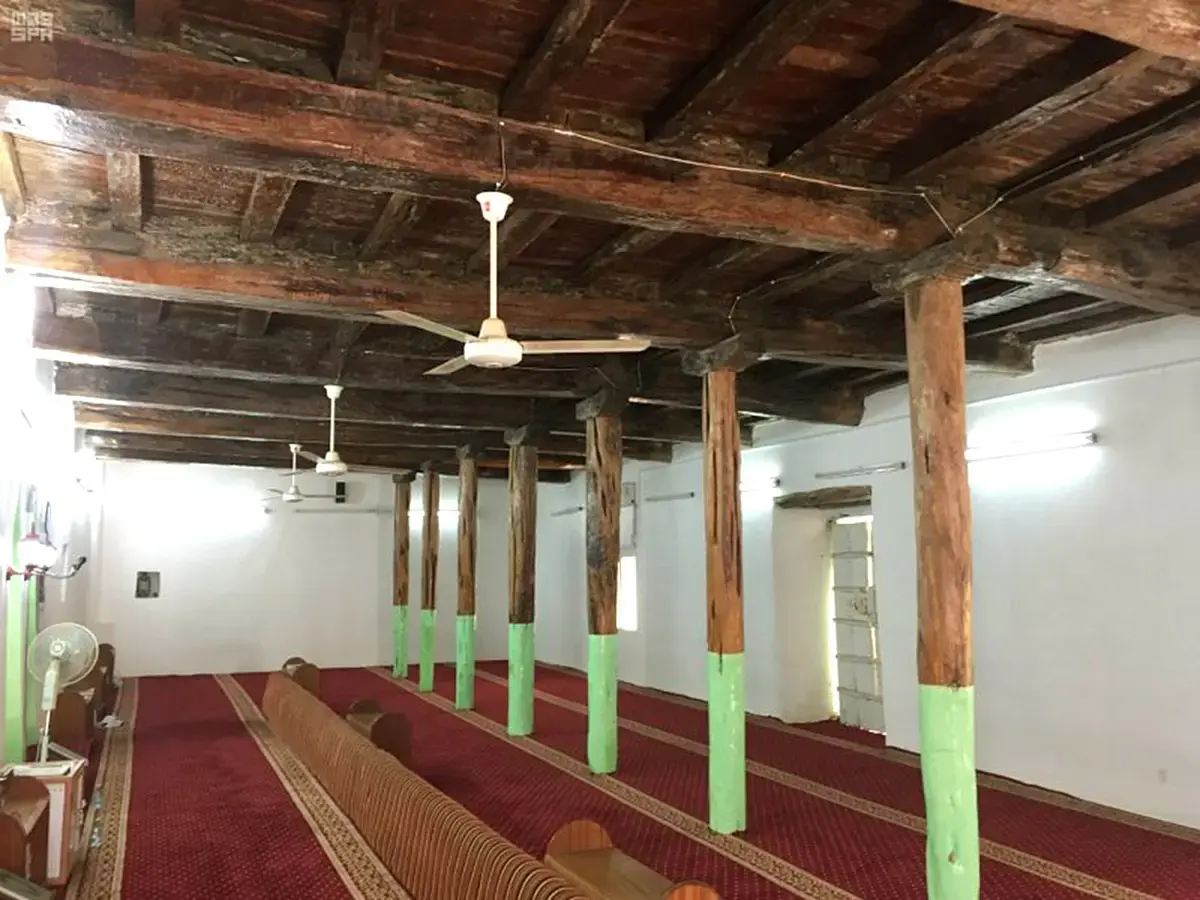
Despite the presence of some religious fanaticism and other sectarian trends, the people of Asir in general throughout their country’s religious history: “They monotheist God, and do not supplicate to anyone other than Him,” and that their mosques: “are devoid of decoration, and their graves do not have domes.” The Asir community is considered, in general, a religious Muslim community that adheres strongly to its religion, and its residents follow the

Sunni doctrine ((the doctrine of the Sunnis and the community)) the doctrine of Imam Al-Shafi’i.

When weakness and frailty began to eat

22

When weakness and frailty began to eat away at the body of the Islamic state and the Islamic nation lived what was called the eras of decadence, and ignorance spread, sects and religious sects that contradicted the Sunnis and the community appeared, the Asir Region was one of the regions.

Islam, which was influenced by the Shiite

23

Islam, which was influenced by the Shiite doctrine, and the Ja`fari and Ismaili sects emerged into existence, and the Sufi orders, especially the new Sufi order known as the Ahmadiyya, which was published by Sayyid Ahmad bin Idris in Tihama Asir between 1245 AH - 1253 AH corresponding to 1829 AD - 1837 AD, and as a result new orders such as Al-Rashidiyah and others appeared.

The call of Sheikh Muhammad bin Abdul

24

The call of Sheikh Muhammad bin Abdul Wahhab in Diriyah, which is the Salafi call according to the doctrine of the Sunnis and the community - the doctrine of Imam Ahmed bin Hanbal, had appeared and the people of Asir Region had heard of it. Many of its sons migrated to Diriyah to seek knowledge at the hands of Sheikh Muhammad bin Abdul Wahhab, and they returned to their regions determined to spread the correct Salafist call.

Among them were Muhammad bin Amer Abu

25

Among them were Muhammad bin Amer Abu Nuqtah, his brother Abdul Wahhab, and Ahmed bin Hassan Al-Falqi, and her arrival in the Asir Region resulted in the removal of some heresies that were related to religion, and from which no society was devoid of them.

The scholars and princes of the region

26

The scholars and princes of the region undertook the mission of enjoining good and forbidding evil, borders were implemented, security and stability prevailed, and the economic conditions of the region flourished until the outbreak of foreign wars.

The intellectual movement was also active, and

27

The intellectual movement was also active, and the scholars of Najd communicated with the scholars of Asir, and society in the Asir Region became a homogeneous society, and the social loyalty of the tribe to the state changed into a common unity that the societies of the Arabian Peninsula had not witnessed for many centuries.

These religious, intellectual and social effects were

28

These religious, intellectual and social effects were not limited to that period only, but rather their effects and results extended to the people of the Asir Region until the present time.

Companions and followers of Asir

There are many companions, may God be

29

There are many companions, may God be pleased with them all, from the Asir Region, and among these companions who contributed to spreading Islam during the Prophet’s era: Sarad bin Abdullah Al-Azdi: When he came to the Messenger of God, may God’s prayers and peace be upon him, at the head of a group of Azd.

Ibn Ishaq said: “Sard bin Abdullah Al-Azdi came to the Messenger of God, may God’s prayers and peace be upon him, and he converted to Islam and became a good Muslim in a delegation of Azd.

The Messenger of God, may God’s prayers

30

The Messenger of God, may God’s prayers and peace be upon him, ordered him to fight whoever of his people had converted to Islam and ordered him to fight with whomever of the polytheists from the tribes who were following him had converted to Islam.”.

From the news of that delegation, we

31

From the news of that delegation, we notice how the Messenger, may God’s prayers and peace be upon him, appointed Sarad bin Abdullah Al-Azdi over his people and to spread Islam and fight its enemies, and how he was worthy of that responsibility, and that they had come to listen and obey God and His Messenger, and therefore they were worthy of carrying that trust that the Messenger of God, may God’s prayers and peace be upon him, said about them (knowledge is in the

Quraysh and trustworthiness is in Al-Azd), just as he, peace be upon him, said (they are the lion of God in his land, People want to put them down, but God refuses to do anything but raise them up.

Habib bin Amr

32

Habib bin Amr: He is Habib bin Amr bin Shahr bin Al-Hajar Al-Azdi from Salaman.

He came to the Messenger of God

33

He came to the Messenger of God, may God bless him and grant him peace, in a delegation numbering seven, as Ibn Saad narrated with his chain of transmission on the authority of Sahl bin Abi Hathmah, who said, I found in the books of Abu Habib bin Amr Al-Salamani that he used to narrate, and he said: We presented Salaman’s delegation to the Messenger of God, may God bless him and grant him peace, and we were seven, so we encountered the Messenger of

God coming out of the mosque to a funeral to which he had been invited, so we said: Peace be upon you, O Messenger of God.

He said: Who are you upon? So we said: We from Salaman have come to pledge allegiance to you on Islam, and we are with those of our people behind us.... So the Messenger taught them the laws of Islam and they returned to their country, and that was in Shawwal of the ten year of the Hijra. Foik Al-Salamani: His father is the great companion, who had company with the Messenger of God, may God bless him and grant him peace, and narrated some hadiths about him.

Ayyad Al-Hajri

34

Ayyad Al-Hajri: He is the great companion Ayyad bin Saeed bin Jubair bin Awf bin Al-Hajar Al-Azdi. He witnessed the conquest of Egypt, and lived with his cousin Alqamah in Giza. Ibn Al-Atheer said: He witnessed the conquest of Egypt and he has a mention, but no narration is known of him. He mentioned Abu Saeed bin Yunus, as was mentioned by his nephew Ayyad bin Sufyan bin Jubair bin Awf bin Al-Hajr Al-Azdi.

Urwa bin Iyadh Al-Bariqi: He is a great companion and a just judge.

He had companionship with the Messenger of God and narrated many hadiths about him. Arfajah al-Bariqi al-Azdi: He is Arfajah bin Harthama bin Zuhair al-Bariqi al-Azdi, and he is a great companion and one of the princes of the Islamic conquests. Ibn al-Atheer, Ibn Hajar and others said about him: (Arfajah al-Bariqai is one of the princes of the Islamic conquests, and we know that they only command the companions).

Suwayd al-Azdi

35

Suwayd al-Azdi: He is the great companion Suwayd bin al-Harith al-Azdi, and he was among the delegation that came to the Prophet with al-Sard bin Abdullah al-Azdi. Junada al-Azdi: He is the great companion Junada bin Malik al-Azdi, nicknamed Abu Abdullah, and he was among the seven Azd delegation to the Messenger of God, may God bless him and grant him peace.

It is worth noting here that there

36

It is worth noting here that there are hundreds of companions and followers, as well as poets, leaders, and geniuses, who were mentioned under the title of Al-Azdi, Al-Bariqi, or otherwise, and they are of Asir Region origin. Urwa bin Abi Al-Jaad Al-Bariqi Al-Azdi: ((A great companion)). Arfaja bin Harthama bin Abdul Aziz bin Zahr Al Bariqi: ((A great companion of mine, he was one of the Muslim leaders in the wars of apostasy)).

Humaydah ibn al-Nu`man ibn Humaydah al-Bariqi al-Azdi

37

Humaydah ibn al-Nu`man ibn Humaydah al-Bariqi al-Azdi: ((A great companion of mine, he was one of the Muslim leaders in the wars of apostasy)). Hudhayfah Al-Bariqi Al-Azdi: ((My Companions)). Abyad ibn Abd al-Rahman ibn al-Nu`man ibn al-Harith ibn Awf ibn Kinanah ibn Bariq al-Bariq al-Azdi: ((a companion)). Hudhayfah bin Muhsin Al-Ghalfani Al-Bariqi: ((A great companion, he was one of the commanders chosen by Abu Bakr Al-Siddiq in the wars of apostasy)).

Al-Ajda' bin Malik Al-Wada'i: A distinguished companion and his son is the pious jurist Masruq bin Al-Ajda'. Shabib bin Gharqada Al-Bariqi: ((a follower and a hadith scholar)). Umm Al-Khair bint Al-Harish Al-Bariqiyya: ((Tabi’iyya)).

Category: عسير