The region is inhabited by about two
01The region is inhabited by about two million people, according to the latest statistics, distributed among cities and rural areas, with differences in population density among them.
The region is inhabited by about two million people, according to the latest statistics, distributed among cities and rural areas,
The region is inhabited by about two million people, according to the latest statistics, distributed among cities and rural areas, with differences in population density among them. The population of the region belongs to authentic Arab tribes that have settled in Asir since ancient times, and have always preserved their heritage and affiliations, which have imprinted all the life activities of the population with their special character, which has taken its civilizational forms throughout the ages, and has developed with its relationships, concepts, values, and ethics in a positive way until the present era.
The region is inhabited by about two million people, according to the latest statistics, distributed among cities and rural areas, with differences in population density among them.
The population of the region belongs to authentic Arab tribes that have settled in Asir since ancient times, and have always preserved their heritage and affiliations, which have imprinted all the life activities of the population with their special character, which has taken its civilizational forms throughout the ages, and has developed with its relationships, concepts, values, and ethics in a positive way until the present era.
Talking about the general composition of the social fabric and the population structure in the Asir
Region shows from the beginning that this society, which went through different historical periods, during which it knew many forms of economic, cultural and social activities, was distinguished as a harmonious, cooperative society that adhered to its values, traditions, and originality at all times, and the different environmental, climatic, and natural conditions of the Asir
Region in which it lived certain types of activities such as grazing and agriculture were imposed on it.
But the Asir society was not a static society that remained as it was, but rather a changing society capable of inventing the forms of development that it needed in order to improve the general standards of its life.
Therefore, we found it not satisfied with the life of herding and agriculture, but rather it practiced commercial activities in different forms that gradually developed into an integrated commercial movement, some of which were within the framework of local commercial exchanges that took place between the people of one city and the surrounding villages, and some of which were external based on establishing commercial relations between the cities of the region or with other cities in the various regions of the
Arabian Peninsula.
This was accompanied by an interest in developing industry locally within appropriate frameworks, starting with the heritage industries practiced by the people of the region through inheritance from fathers and grandfathers, all the way to the modern industries that entered the region with development plans and modern economic trends that included many aspects of life to meet the growing needs of people and society, and at the same time are compatible with the broad progress that all regions of the
Kingdom are experiencing and keep pace with all forms of civilizational manifestations present in the developed countries of the world.
Forms of harmony and cooperation appear starting from family relations, considering that the family represents the smallest formations in society, then it expands to include a group of neighboring families.
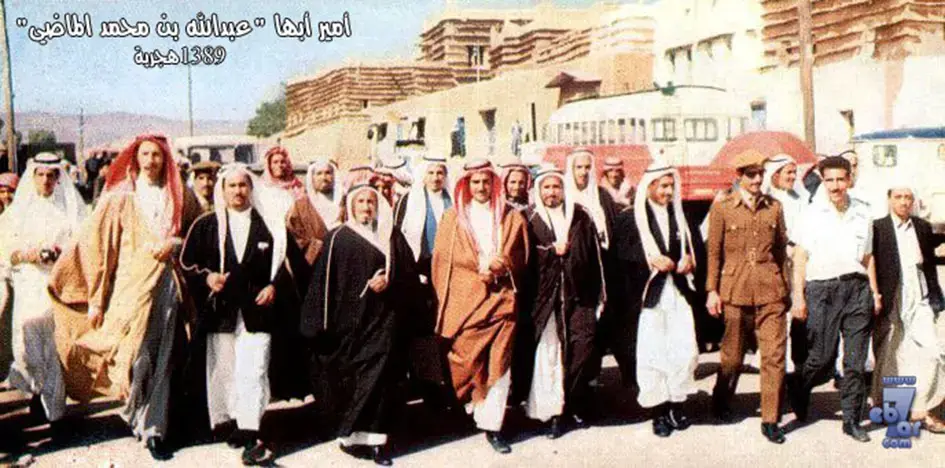
The population of one village even includes the members of the tribe as a whole, to take its general form in the solidarity relations between the tribes represented by everyone’s cooperation in planting and harvesting, building homes, confronting natural disasters, helping the needy, and renting to the tenant.
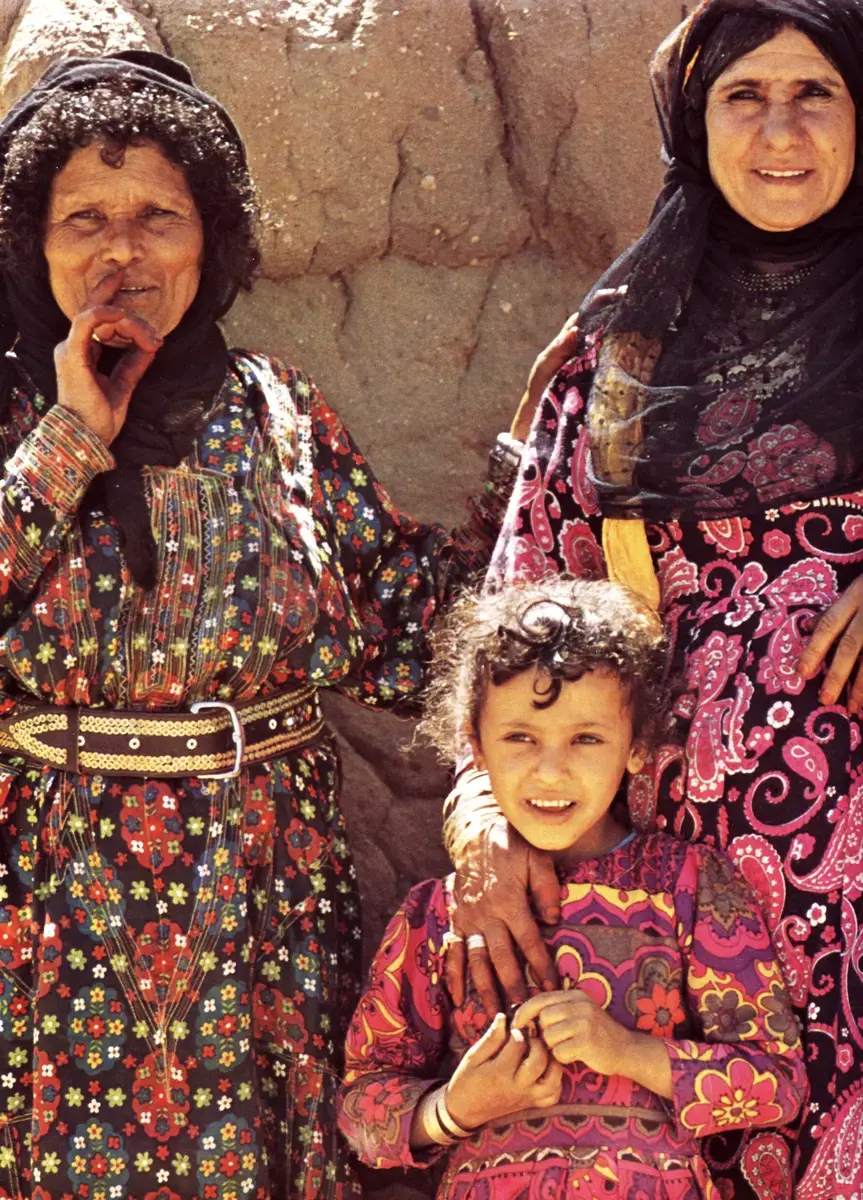
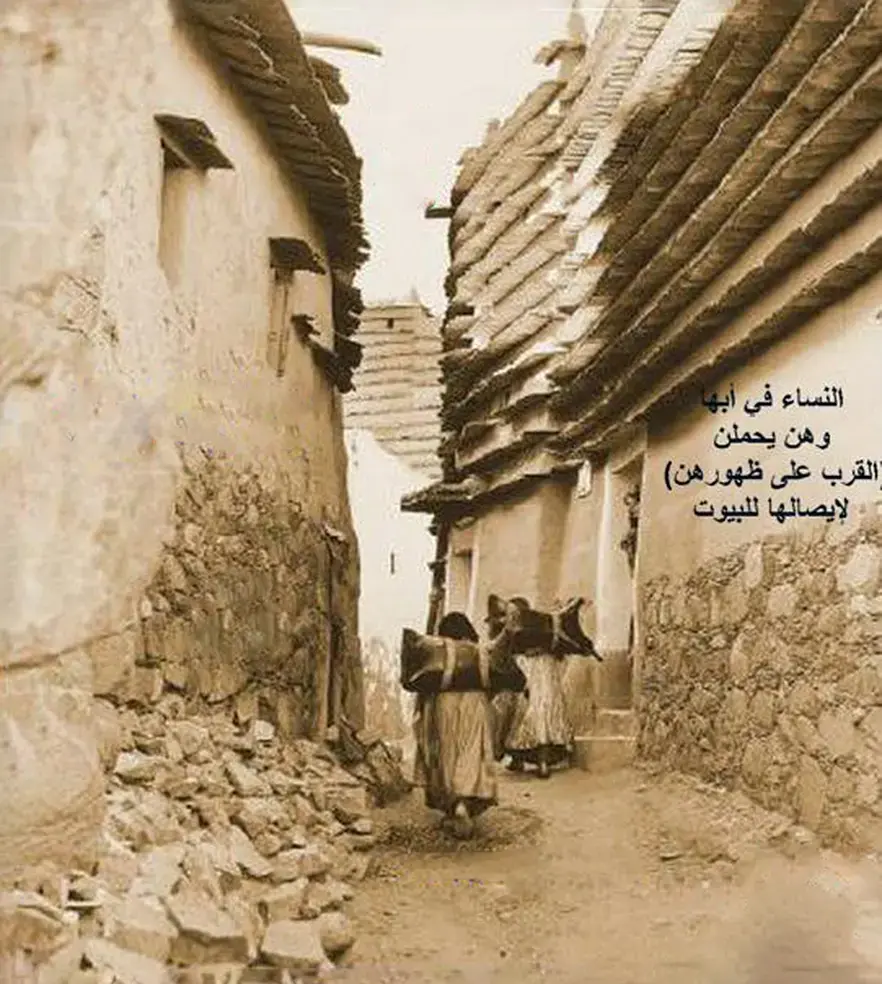
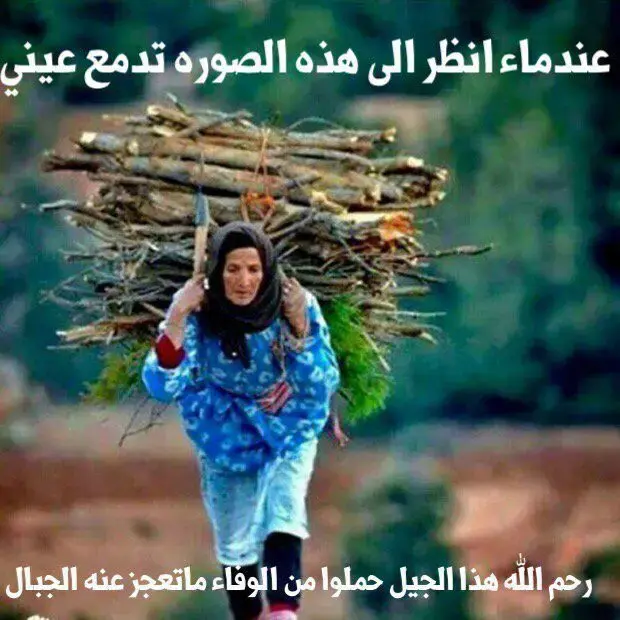
The family, as is known, did not include only the father, mother, and their children, but rather included the families of the children who lived with the parents in one house that included the large family, which required everyone to cooperate in all areas of work in the field and at home, where each individual had a role to play, and the women of the family were not excluded from participation, who were doing work of special importance in addition to the usual household chores, including
participation in agriculture and grazing, but they were specialized in bringing firewood to the house from the fever of the village in which they lived according to laws that were set by the tribes.
This process is organized to protect the vegetation in the area, and she used to grind wheat with a mill at home. Despite all this, she is an artist who decorates her house inside and out with colors and drawings that are rare in comparison. During the seasons, she becomes everyone’s participant in reaping the crops, harvesting, etc., and even children participate actively.
Cooperation in broader frameworks also has its forms, including the establishment of a cooperative fund called (the clan), in which each tribe used to have a special committee meet to collect the agricultural produce, sheep, and cows that people provide during the harvest seasons after paying zakat.
They are kept in a special place for times of need, allocated to honor the strange guest, pay the debt for the weak and afflicted, the expenses of the invasion, feed the begging and the poor, help the needy whose need is proven, and help the farmers. Those who are exposed to Asiries such as the destruction of farms as a result of floods, the collapse of houses, the destruction of livestock, etc.
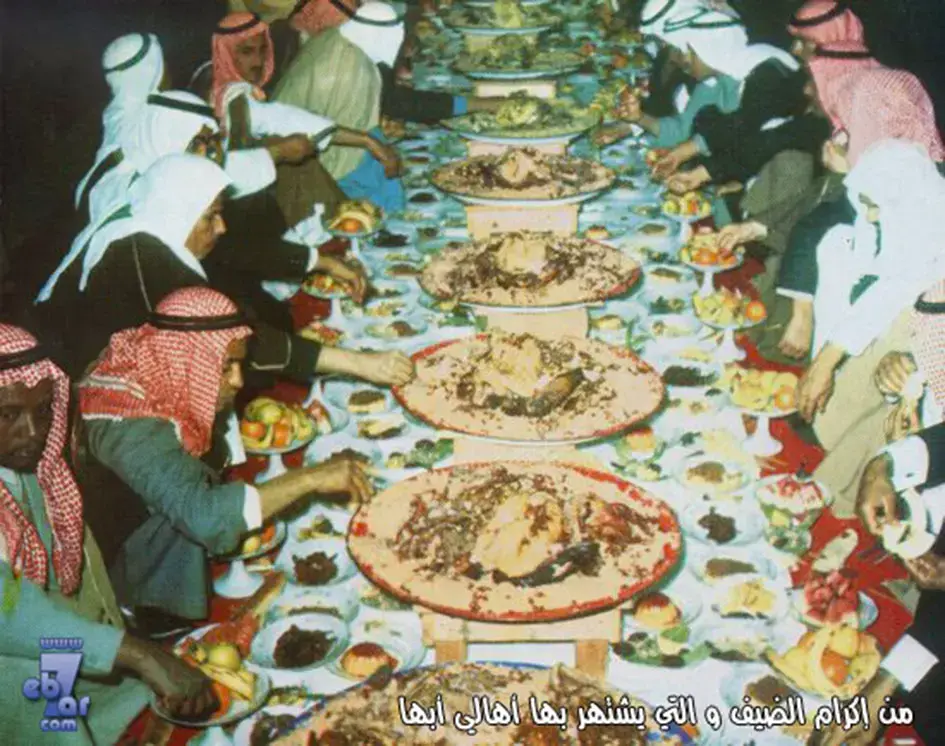
As well as cooperation in receiving and hosting the guests of the village or tribe in what is known as the plan or representative, where everyone participates in hosting, and what indicates that the Asir society is a generous society that honors its guests and treats them with what they deserve.
When the guests come to them, they go out of their homes outside the village wearing their daggers, flanks, and rifles full of bullets, and when the guests arrive, they fire bullets into the space as an expression of greeting and welcome, and the guests exchange gunfire with them, and then the guests are distributed among the village houses, where They are treated with honor.
Cooperation takes another form in joys and sorrows, as collective participation in them represents a kind of spontaneous solidarity, such as celebrating marriage, as the Asir people in Tihama and Sarat used to marry their sons and daughters at a very early age, around fifteen, to ensure a large number of offspring and to protect the sons and daughters from slipping into forbidden things. They treat the married person with all that he can, and it is called Al-Rafada.
On these occasions, celebrations, dances, and popular games are held. The custom of celebrating circumcision is one of the distinctive customs in the Asir Region, where a special season is chosen for it, which is after or near the holidays. Several families gather to circumcise their sons in one day, and the entire tribe is proud of this day and holds celebrations, dances, and folk games.
The custom of celebrating births and highness or highness or highness, and it is one of the beautiful Asir customs of great importance. If a people loves a person or is older than him, they express this by naming one of their newborns with him and saying, “This is so-and-so,” and this results in the emergence of a new bond between the people of the named and the named, in which there is a lot of kinship, appreciation, and dearness.
There is a custom of asking for pardon for others.
If a judge sentences someone to a sentence that does not have a legal penalty, the sheikhs and elders of the people rise up and go down to the rightful person and throw their turbans and their heads in his hands, asking for pardon for the convict. Under no circumstances can the rightful owner turn them away disappointed. This custom indicates the chivalry and chivalry that Asiri society possesses.
The habit of giving face is another custom that indicates chivalry and respect for one’s word.
If one person turns to another in a matter, the other person gives his face to the first by saying, “I gave you my face,” or “You are in the face of God, then in my face,” as an expression of his sponsorship and ensuring security and safety for him wherever he resides or goes. Eid has its splendor, splendor, and distinct taste, and the manifestations of joy and happiness increase among children and adults.
The customs and methods of celebrating it vary from one region to another, but they all agree on the exchange of visits and frequent family communication between family, relatives, neighbors, and friends. The Eid in the village has a special, distinctive and wonderful taste that is never comparable to the city Eid, as it shows the depth of the relationship between the members of the community.
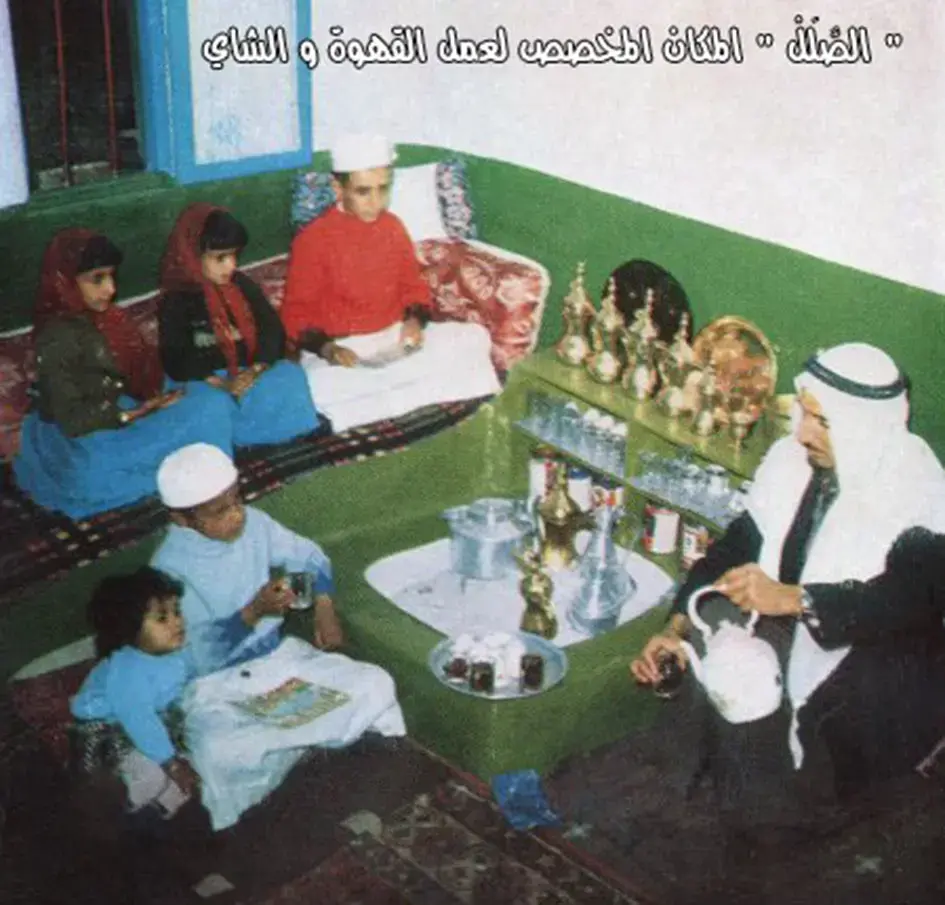
Immediately after the Eid prayer, everyone goes to visit each house to congratulate its family on the Eid and to eat the well-known Eid hospitality consisting of arika, fingers, or mabthout, and tannour bread with ghee, local honey, and yoghurt, in addition to coffee, dates, tea, mint, peel, and snout.
Housewives also have become accustomed, a day or two before Eid, to arranging the house, cleaning it, and decorating it inside and out, changing the locations of the furniture in the house, and applying henna to their heads, combs, perfume, basil, and powder, which are distinguished by their beautiful scent, and this scent appears in the dress, the shayla, and the handkerchief.
Other women also put henna on their hands and feet in order to rejoice and celebrate the arrival of Eid.
One of the most beautiful and distinctive aspects of Eid al-Adha in the villages of the Asir Region is eating the sacrificial meal every day with one of the village members in a wonderful gathering of family and relatives so that every family in the village has the opportunity to highlight the manifestations of love, cohesion and hospitality.
Another wonderful and distinctive phenomenon in the villages of the Asir Region is that some of the men of the village hold evening parties with songs and folk games such as the step and the crawl, in which the men sing to the accompaniment of the drum with the men of other villages, and this phenomenon is still present in many of the villages of Asir.
On Eid, children go to greet and visit family, relatives, friends, and neighbors, and they play some popular games, such as camel racing, the Habbiya game, and other games, and these aspects still exist today in some Asir villages.