Popular foods and drinks
Previous Next Back to index العربية
Popular foods and drinks

Popular foods and drinks

The popular foods in the Asir Region represent part of its popular heritage. These popular foods are often linked to animal and agricultural production in the region and what is...

The popular foods in the Asir Region represent part of its popular heritage. These popular foods are often linked to animal and agricultural production in the region and what is compatible with its geography and climate. The most famous of these foods are: Haneeth: This is what is known in the Hijaz region as “Mandi,” but the former has its own peculiarity and taste. This dish is made from lamb and goat meat and has special techniques. Haneeth is considered one of the most famous foods in the governorate and is distinguished by its delicious flavour.

Where the sheep or goat is brought after slaughtering it and cutting its meat in a conventional manner, and placed in a pit with sides built with stones called (al-Muhannad) after it is prayed over intense flames, and the meat is placed inside it in an organized manner, and the meat and coals are separated by a barrier of specific herbs (markh or goods), then the pit is covered with cardboard and empty bags, then it is buried in dirt so that steam does not escape.

2Sections
6Images
6051Characters
عسيرCategory
Popular foods and drinksPopular drinks
Popular foods and drinks
Popular foods and drinks - 1
Popular foods and drinks
Popular foods and drinks - 2
Popular foods and drinks
Popular foods and drinks - 3
Popular foods and drinks
Popular foods and drinks - 4
Popular foods and drinks
Popular foods and drinks - 5

Popular foods and drinks

The popular foods in the Asir Region

01

The popular foods in the Asir Region represent part of its popular heritage. These popular foods are often linked to animal and agricultural production in the region and what is compatible with its geography and climate. The most famous of these foods are: Haneeth: This is what is known in the Hijaz region as “Mandi,” but the former has its own peculiarity and taste. This dish is made from lamb and goat meat and has special techniques.

Haneeth is considered one of the most famous foods in the governorate and is distinguished by its delicious flavour.

Where the sheep or goat is brought

02

Where the sheep or goat is brought after slaughtering it and cutting its meat in a conventional manner, and placed in a pit with sides built with stones called (al-Muhannad) after it is prayed over intense flames, and the meat is placed inside it in an organized manner, and the meat and coals are separated by a barrier of specific herbs (markh or goods), then the pit is covered with cardboard and empty bags, then it is buried in dirt so that steam does not escape.

After a period not exceeding two hours

03

After a period not exceeding two hours, the meat is extracted, salt is added to it, and it becomes ready to eat.

It is stated in the Noble Book of God: (It was not long before he brought a freshly baked calf.) Mahshosh: The meat and lard are cut into small pieces, then placed in a pot and cooked without water until the fat melts and the meat browns, then spiced with cinnamon and cardamom with a little salt, and is most commonly associated with the occasion of Eid al-Adha.

Porridge

04

Porridge: It is made of fine flour and is placed in a pot of boiling water or broth, then the ground is beaten with the hand one blow after the other, then it is rubbed with a board made of splined wood called a skewer until it is cooked, then it is served to eat with the broth, ghee and milk. Al-Tasabi: Wheat dough is fermented, then cut into small pieces, then placed in milk or boiling water and left until cooked, then served with ghee and honey.

Thareed: made from fermented corn or thyme bread.

It is fermented with milk and ghee

05

It is fermented with milk and ghee, sweetened with sugar, and served as breakfast. It is one of the popular suhoor meals in Ramadan. Al-Thuraif: It is pre-fermented corn bread or millet, which is kneaded and mixed with milk, and local ghee, honey and sugar are placed on it. Areka: An ancient dish famous in Asir. It is one of the ancient popular foods.

Its consistency is whole wheat bread that is well rubbed until it turns into cohesive grains, then a hole is dug in its middle in which ghee and honey are placed.

Al-Mabthout

06

Al-Mabthout: A very delicious popular dish consisting of whole wheat flour that is kneaded, then rubbed and cut into very small pieces, then cooked with water until cooked, wild ghee is poured over it and served to the guests. Marqooq: These are pieces of wheat dough, cut into thin slices and cooked with tomatoes and meat.

Al-Masila: It consists of corn flour mixed with water and left overnight until it ferments, then it is mixed on the second day and baked in the form of circular discs. Some put onions with it to increase its flavour.

The stalk

07

The stalk: It is a type of porridge. It is made from uneven barley, which is harvested at a completely uneven level. It is cooked in its ears in a large pot and salted. After it is cooked, it is extracted and spread out under the sunlight until it dries and hardens. Then it is pounded with a thick stick called (al-makhbatah). After that, the ears and impurities are separated from the grain using a sieve and sieve.

After filtering, it is ground with a mill and the finest types of porridge are made from it after grinding.

Stir it with hot water, put it

08

Stir it with hot water, put it in a bowl, and eat it with your hands. Some people add wild ghee to it. The difference: It is called Rawaka and it consists of corn flour mixed with milk and placed on the fire for a quarter of an hour. Some spices can be added to it. It is the same as the ingredients of Muthariya, but it is very liquid and has a special peculiarity. When a person becomes ill and refuses to eat, this meal is served to him until it revitalizes him.

It is served hot to warm the

09

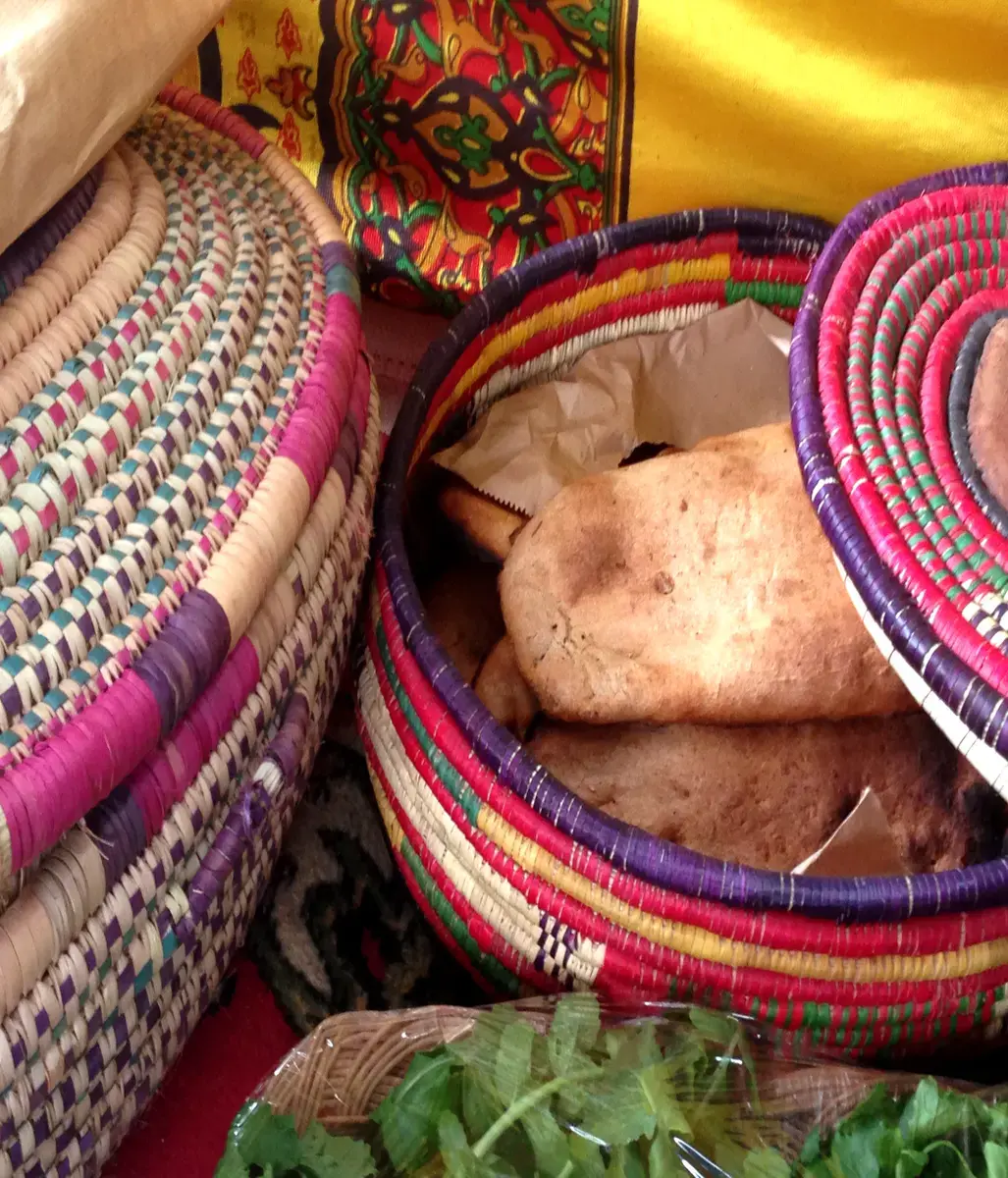
It is served hot to warm the sick or hungry person due to its ease of digestion on the stomach, and only the milk in which it is cooked is added to it. Bread ((duh)): Its ingredients are wheat flour, barley, corn, millet, hawthorn, or lentils. It is kneaded and a little yeast is added to it, which is made from sour milk, except for the barley flour, which is kneaded without adding yeast to it.

Then it is baked in the meva, which is a dug earth oven lined with pottery or burnt clay.

The dough is placed on its side

10

The dough is placed on its side from the inside, and it resembles tamis ovens, or modern bread, and is served with ghee and honey. And other types of edamame, or the milk that was available at that time.

Khmer: Corn bread after fermentation is one of the oldest and most famous foods and is eaten with any type of vegetables such as okra and molokhiya, or with dried fish, or with salit (sesame oil), or local ghee, or finely crumbled and sprinkled with meat broth or hawa broth.

It is a fat that is placed

11

It is a fat that is placed in a pot on the fire, some onions are cut into it, then it is extinguished with water and it is called muftoot. Al-Razifa: Heat the butter over the fire, then bring a little hot flour, then bring a white, spherical stone made of quartz, put it in the fire and heat it until red, then stir it in the flour, add it to the butter, leave it for a little while until it is cooked, then serve it to eat with whole wheat bread, mabthout, or areca.

Al-Mraysa

12

Al-Mraysa: It is a famous popular dish made from flour bread crumbled well with bananas and mixed with ghee, honey or sugar. It is similar to the meal (masoub). Lahouh: It is a mixture of corn flour with water and salt in a less dense form that is poured onto a clay griddle placed on a stove. This dish is most popular in Ramadan.

Al-Mukhoud: It is made of light dough and is called maqloud because it must be flipped to the other side when placed on a sheet pan made of iron. It is similar to tamis today.

It is sometimes mixed with onions and

13

It is sometimes mixed with onions and served to eat with various types of edamat, mu’rak, ghee, and honey. It is still made today. Rawati: It is scrambled eggs with rice flour added to it. It is poured into special trays and then placed on the fire with a tight lid on it so that the heat comes from above and below. It is left on the fire to cook until the surface turns red and then it is ready to eat.

Lahida

14

Lahida: It is mostly made from wheat, with milk and spices added to it, mixed with ghee and honey, and served to the elderly, or to anyone who requests it, but it remains an internal dish and is not officially served to guests. There are also other famous dishes in Khamis Mushayat that there is not enough space to display, the most important of which are: Fattah, Jareesh, Al-Mabathutha, Al-Marqooq, Al-Hanini, and others.

Locusts

15

Locusts: The people, in groups and individuals, used to anticipate and monitor the seasons of the locusts, which usually multiply after the rainy seasons, by asking about the places where the swarms of locusts arrive, and they follow them at night. They are collected in bags and then cooked in a large pot with water and salt.

They are then spread out in the sun and then fried on an iron griddle (pan) until they become red in color and crispy, and nothing more delicious than their taste.

There are several foods that we mention, but not limited to

16

There are several foods that we mention, but not limited to: Rawaka roll, Al-Hanini, Al-Mabthoutha, Jarish, Harissa, and Ghalia. Sesame oil is used in most types of foods and in the manufacture of local sweets and other industries. Sweets: There are locally produced sweets that are manufactured in Muhayil Asir and exported to the regions of the Kingdom, such as: Al-Mashaq, Al-Madroob, and Al-Halqoum.

Popular drinks

Coffee

17

Coffee: The coffee that is grown in some areas of Asir is considered the main drink in the region. It is also considered a symbol of hospitality. It is drunk hot after being roasted, with fresh coffee, ginger, cloves, or cardamom added to it as desired. Peel coffee: It is prepared from coffee peels after roasting, adding anise and ginger. It is drunk especially in the winter to warm the body.

Sweet coffee: It is prepared from cinnamon boiled with water and added sugar and is drunk on happy occasions.

Category: عسير
Previous Back to index Next